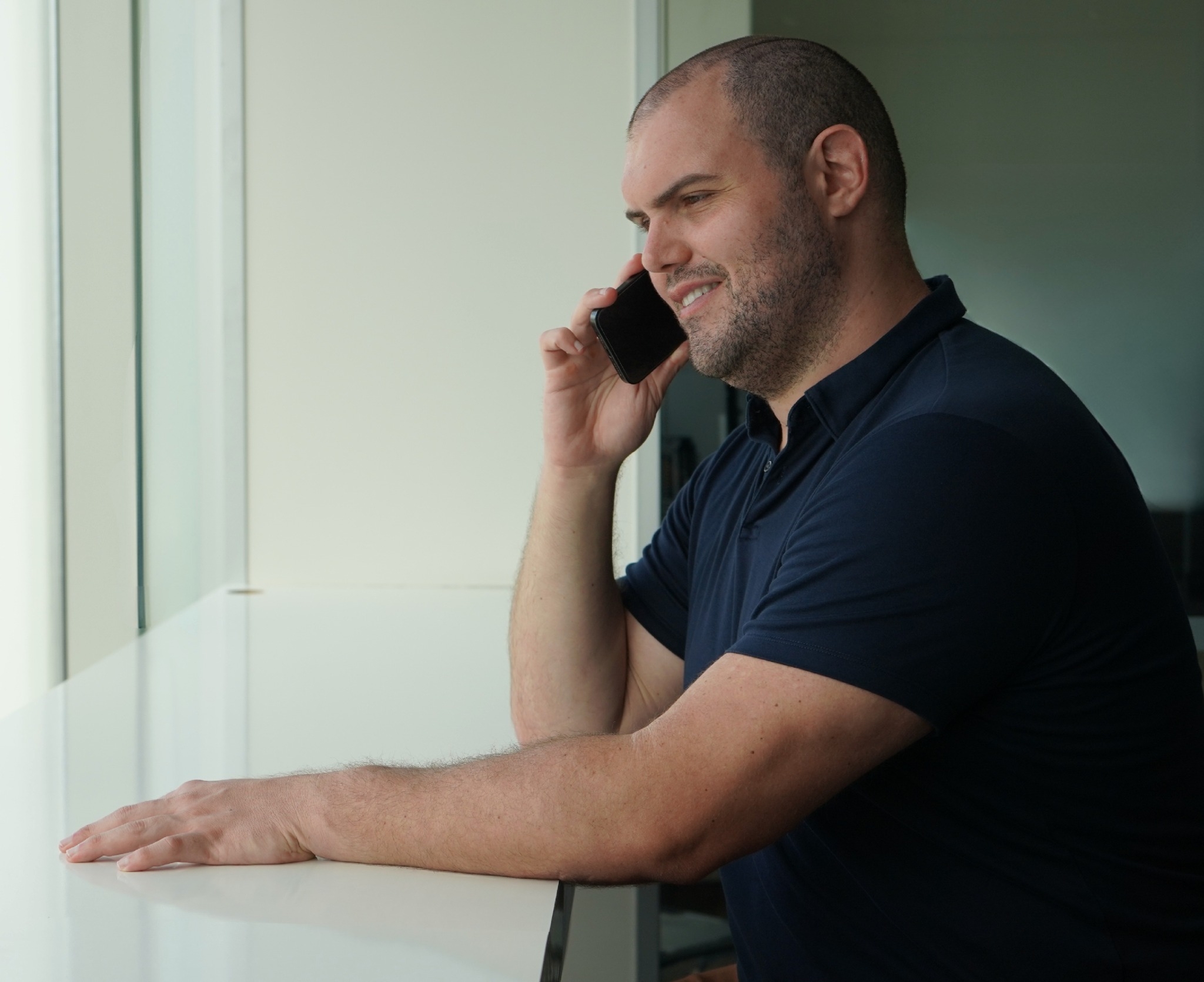
I'm the founder of Armenis Digital and the only person who works on client accounts. There's no team behind me handling the day-to-day, no account managers who took a handover call, no juniors running your campaigns while I focus on winning new business.
That's a deliberate choice — not a limitation. Every strategy call, every campaign decision, every recommendation comes from 8+ years of focused experience in Google Ads and eCommerce. Applied directly to your account, by the person you spoke to.
I built Armenis Digital to be lean by design. Fewer clients, deeper relationships, better results. The kind of business I'd want to work with if I were on the other side of the table.
Most Google Ads practitioners are strong on one dimension — technical execution or commercial thinking. Very few are genuinely strong on both. That combination is what I've built over 8 years.
Shopping, Search, Performance Max, feed strategy, attribution, bid strategy, account architecture, Merchant Center — the full stack, with eCommerce context applied at every level. Not a generalist who also runs Google Ads.
The ability to connect ad performance to business outcomes — margin contribution, product mix, offer strength, funnel efficiency, customer acquisition economics. Most practitioners stop at ROAS. I don't.
The ability to identify what's actually limiting growth — not just optimise what's there. Most underperformance has a root cause that isn't visible from surface metrics. Finding it is usually where the value is.
I use AI tooling to improve diagnostic speed, surface patterns faster, and deliver better insight. It's built into how I work — not a feature, a capability. Human judgment still drives every decision.
If something is wrong, I'll tell you. If your feed is the problem, not the campaigns, I'll say so. If a strategy isn't working, I'll be honest before you need to ask. That kind of communication builds trust — and trust produces better outcomes.
The way the business is structured isn't accidental. Every choice is made to maximise the quality of thinking and the depth of attention each client gets.
I work with a deliberately small number of clients at any time. The lean model only works if I can genuinely focus — so I limit capacity to protect quality.
Every strategy call, every campaign decision, every report — from me. No delegation to account managers or junior analysts. You deal with the person doing the thinking.
Direct and practical. I communicate when something matters — not with a stream of updates designed to look busy. Async-first, video calls when useful, no meetings for the sake of meetings.
Gold Coast, Australia. I work with brands across Australia and internationally. Time zone alignment matters more than geography — we work it out.
Most clients start with an audit, then move into ongoing management if the fit is right. I prefer retainer and performance-based models — they align incentives and support long-term thinking.
I share thinking about Google Ads, eCommerce growth, lean agencies, and AI systems through YouTube and written content at nikarmenis.com. It's how I stay sharp and how most people find me.
I've seen what agencies look like when they optimise for growth over quality. More clients, more staff, more management overhead, more layers between the person who won the work and the person doing it. The output suffers. The client experience suffers. And often, so does everything else.
Armenis Digital is built around a different set of priorities. Fewer clients, better work, stronger relationships, higher margins, lower stress. A business that supports life rather than consuming it.
That isn't a compromise — it's a competitive advantage. Clients who work with me get something most agencies structurally can't offer: a genuinely experienced person who's directly accountable for their results, with real capacity to think and not just execute.
"Business should support life, not consume it. Lean and profitable beats big and complex. Simplicity and leverage matter more than hustle and noise."
— Nik Armenis, founderThese aren't values written for a website. They're the things that actually inform how I make decisions — in the business and outside it.
Family is the non-negotiable. The business is built to support it — not compete with it. That shapes every capacity and commitment decision I make.
I say what I think. If the honest answer is uncomfortable, I still give it. Long-term trust requires consistent honesty, even when it's inconvenient.
Simplicity is harder than complexity. Finding the few things that actually move the needle, and ignoring the rest, is where most of the value is.
For clients and for the business. Revenue without margin is just expensive. Every engagement should create real commercial value — not just activity.
Physical and mental. A business that works you into the ground isn't worth building. Sustainable performance requires taking care of yourself first.
The ability to choose how I spend my time. The lean model exists to protect this — for me, and to give clients access to my best thinking, not my burnt-out version.
The honest version — so there are no surprises on either side.
Every conversation, every recommendation, every call. Not someone who got cc'd on an email. The person actually working on the account.
If your tracking is broken, I'll say so. If your offer is the constraint — not the ads — you'll know. If something I tried didn't work as expected, I'll tell you that too.
Margins, product mix, funnel, offer, pricing — if it's relevant to what we're trying to achieve with Google Ads, it's in scope. I'm not limited to what's inside the platform.
I don't send dashboards full of numbers and call that a report. I tell you what matters, what it means, and what we're doing about it. Clear, concise, actionable.
If you want someone to agree with everything, manage a huge number of daily touch points, or promise specific results in a specific timeframe — I'm probably not the right fit. If you want a trusted partner who's genuinely invested in your results, that I can be.
The best first step is a discovery call or an audit. Either gives us a chance to figure out whether working together makes sense — with no pressure to commit to anything.